Google Pixel 10a : n an industry obsessed with “newness,” Google has taken a surprisingly calm approach with the launch of the Google Pixel 10a. While the tech world usually expects a radical overhaul every generation, the 10a feels like a masterclass in refinement rather than reinvention. If you were looking for a futuristic redesign, you might be disappointed but if you’re looking for the most polished mid-range smartphone Google has ever built, this might be it.
At first glance, the Pixel 10a is a spitting image of its predecessor, the Pixel 9a. It retains the same silhouette, the same dimensions, and the same philosophy: high-end software packed into a sensible, no-nonsense body. But as the saying goes, “the devil is in the details,” and Google has tucked away several meaningful upgrades beneath that familiar exterior.
Google Pixel 10a Design
Google has doubled down on the design language introduced last year. The Pixel 10a features a signature “flush” back, where the dual-camera system sits entirely flat against the chassis. By making the phone slightly thicker, Google has achieved two things: a cleaner aesthetic without a wobbling camera bump and enough internal volume to house a massive 5100 mAh battery.
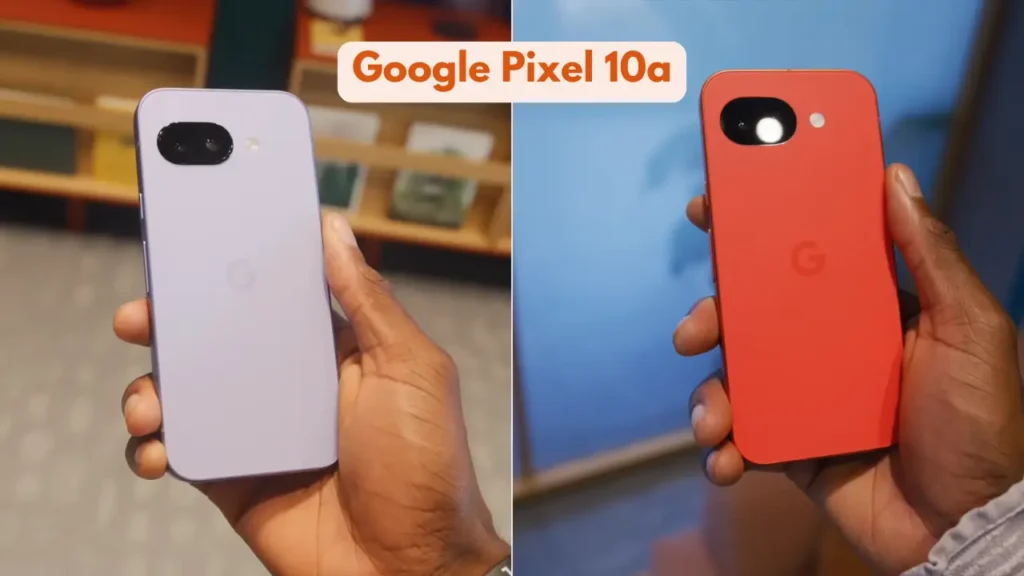
- Materials: It sticks to the reliable combination of an aluminum frame and a high-quality plastic back. While some may miss the premium feel of glass, the matte plastic finish is exceptionally durable and resistant to fingerprints.
- Durability: One significant hardware jump is the transition to Gorilla Glass 7i on the front, replacing the aging Gorilla Glass 3. This offers substantially better scratch resistance for the daily grind.
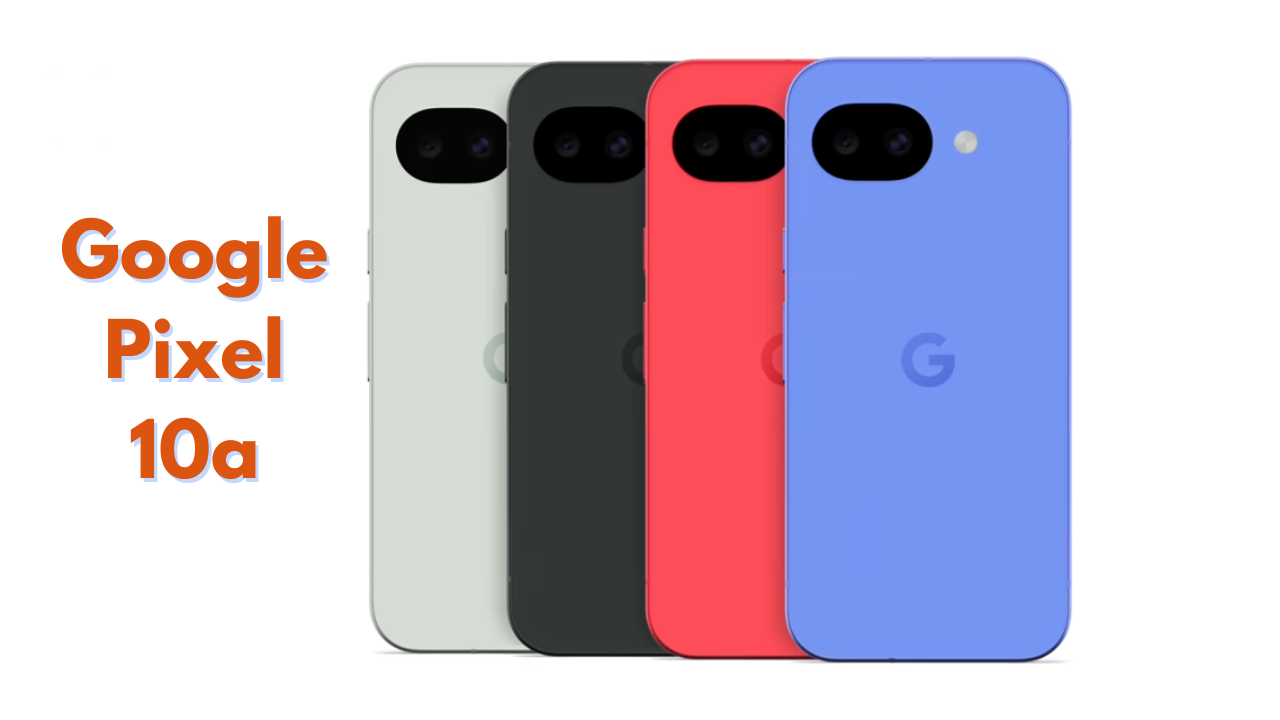
- Colors: The lineup gets a fresh coat of paint with four new shades: Obsidian, Fog, Berry, and Lavender.
Google Pixel 10a Display
While the screen size remains a compact 6.3 inches, the Actua Display has received a literal “glow-up.” The peak brightness has been boosted by roughly 10%, reaching a staggering 3,000 nits. This makes the Pixel 10a one of the most readable phones in direct sunlight within its price bracket.
However, some “Pixel-isms” remain. The display still defaults to 60Hz out of the box to save battery, though users can toggle it to a smooth 120Hz in the settings. The bezels also remain slightly thicker than the flagship Pro models, keeping that distinct mid-range identity.
Hardware Strategy
Perhaps the most controversial aspect of the Pixel 10a is the silicon. For the first time in recent years, Google has opted not to include its latest flagship chip (the Tensor G5) in the A-series. Instead, the Pixel 10a is powered by the Tensor G4, the same processor found in last year’s lineup.
Why the “Old” Chip? Google seems to be signaling that hardware benchmarks are no longer the priority. By sticking with the G4, they can keep the starting price at a competitive $499 while focusing on thermal efficiency and software optimization. For the average user, the G4 is still more than capable of handling 4K video editing, multitasking, and AI processing without breaking a sweat.
Software & AI: The Real “Secret Sauce”
If the hardware feels like a “spec bump,” the software is where the Pixel 10a earns its keep. Google is leaning heavily into its identity as a software-first company. The 10a comes packed with AI features that were previously reserved for the expensive Pro models:
- Auto Best Take: No more ruined group photos. The AI scans multiple frames to ensure everyone is smiling and looking at the lens.
- Camera Coach: An interactive guide that helps amateur photographers frame their shots and adjust lighting in real-time.
- Satellite SOS: A massive safety upgrade. In supported regions, the Pixel 10a can now connect to satellites to contact emergency services when you’re off the grid without a cellular signal.
- Quick Share x AirDrop: A new bridge in the ecosystem. The 10a features native file-sharing capabilities that allow it to “talk” to Apple devices seamlessly a feature long-requested by cross-platform households.
The Comparison: What Actually Changed?
| Feature | Pixel 9a | Pixel 10a |
| Processor | Tensor G4 | Tensor G4 |
| Peak Brightness | 2700 nits | 3000 nits |
| Glass | Gorilla Glass 3 | Gorilla Glass 7i |
| Charging (Wired) | 23W | 30W |
| Wireless Charging | 7.5W | 10W |
| Security Updates | 7 Years | 7 Years |
The Bottom Line: Who is this for?
The Pixel 10a is a “safe” phone. It doesn’t try to reinvent the wheel because the wheel Google built last year was already excellent. It offers the same elite-tier 48MP main camera, a massive battery that easily lasts two days, and a software experience that is arguably the cleanest in the Android world.
If you are currently using a Pixel 9a, there is almost no reason to upgrade. However, for those coming from a Pixel 6a, 7a, or an aging mid-range competitor, the 10a is a powerhouse of value. It’s a phone built for the “routine” for people who want a device that works perfectly every time without needing to know the technical jargon under the hood.
Final Verdict: An “afterthought” for some, but a “perfectly refined tool” for most.
Read More : Vivo V70 Elite, V70 launch today: Check Price, Specifications, Display, Camera and Battery