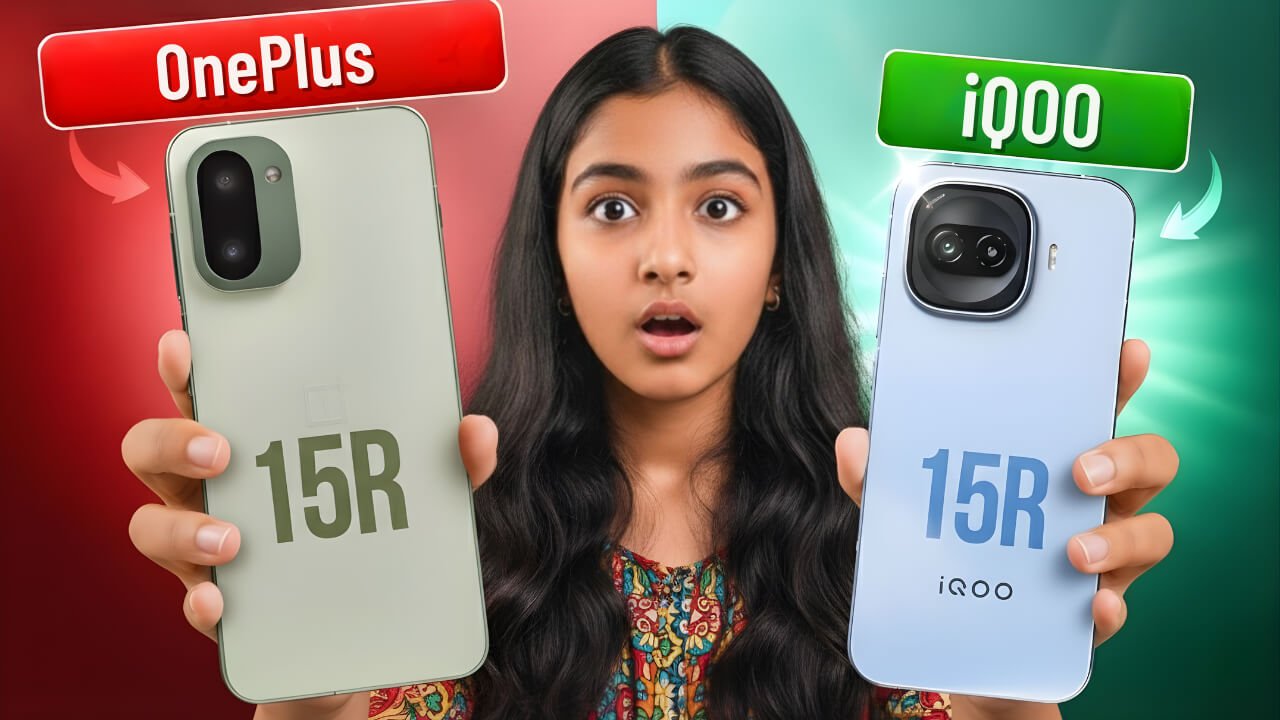
OnePlus 15R vs iQOO 15R : If there is one segment witnessing the fiercest competition this year, it is the upper mid-range smartphone category. And at the center of this battle stand two aggressive contenders OnePlus 15R and iQOO 15R.
On paper, both devices look strikingly similar. Powerful Snapdragon chipset, high refresh rate display, large batteries, fast charging, and capable camera systems. But as always, specifications don’t tell the full story.
After closely examining both phones in real-world conditions daily usage, gaming sessions, camera testing, and battery endurance the differences begin to surface. Here’s a detailed, ground-level comparison that goes beyond spec sheets and focuses on actual experience.
OnePlus 15R vs iQOO 15R Design and Build
The first thing you notice is the tactile feel. OnePlus has stuck to its premium roots by using a Glass Back and a metallic middle frame. It feels substantial, expensive, and screams luxury. However, glass is heavy and can be quite slippery without a case.
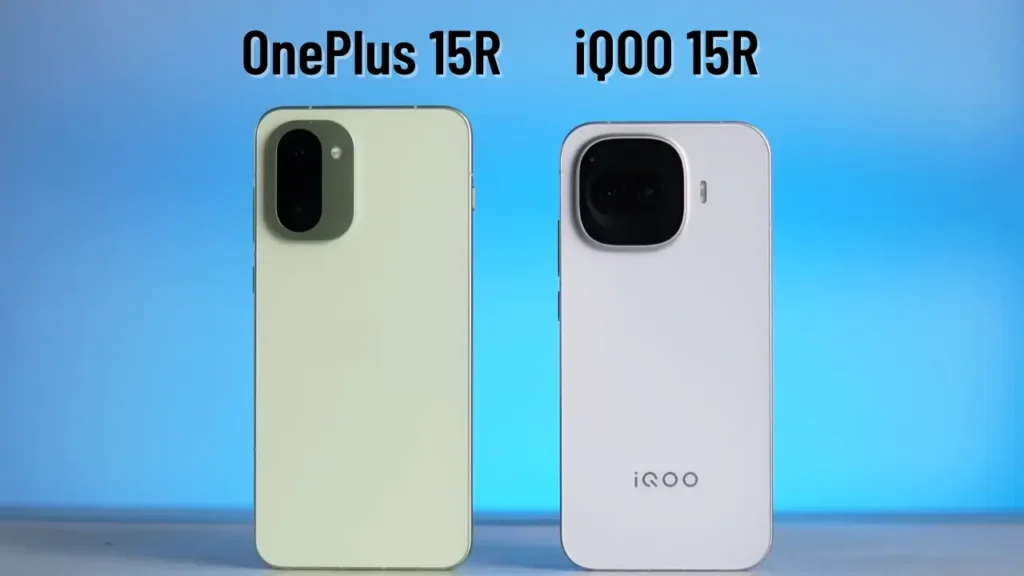
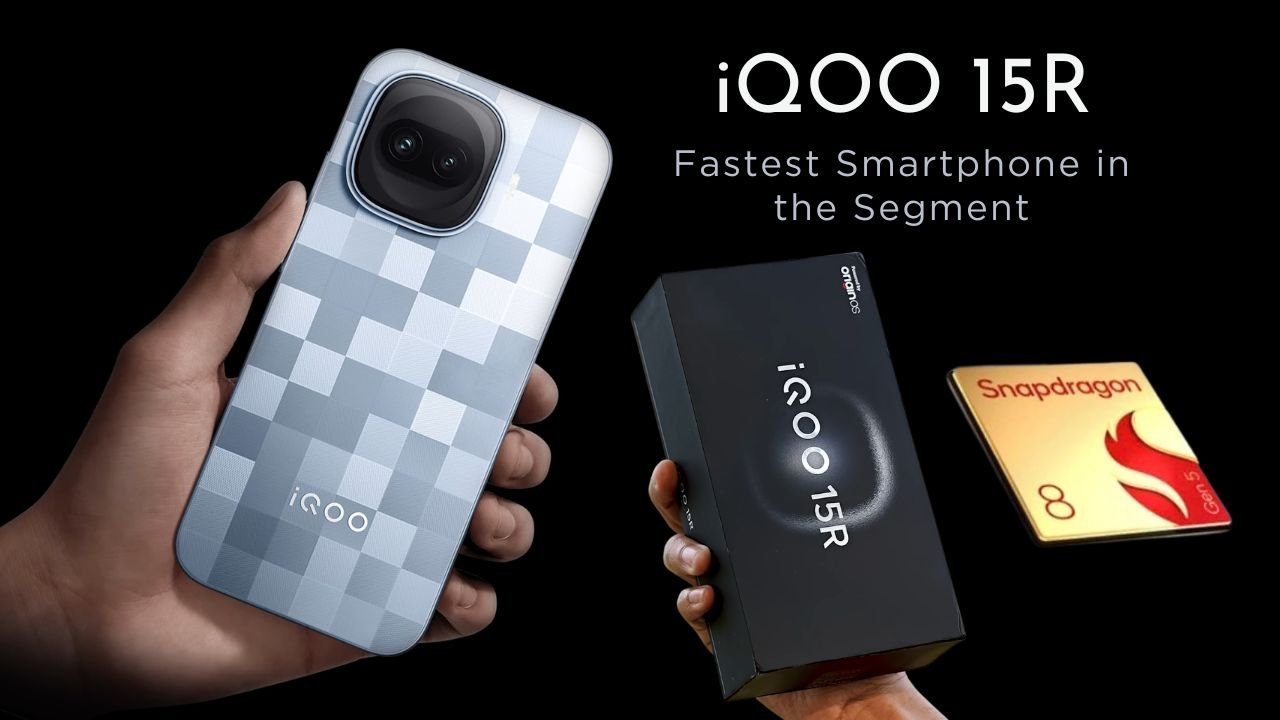
iQOO, surprisingly, has opted for a high-quality Polycarbonate (Plastic) back. While some might see this as a “downgrade,” it serves a functional purpose. The iQOO 15R is significantly lighter and boasts a superior weight balance. If you are a mobile gamer who spends hours holding the device, the iQOO’s ergonomics and “handiness” feel much better than the slightly bulky OnePlus.
Durability Note: Both phones feature impressive IP68/69 ratings, meaning they can survive a dip in the pool. OnePlus goes a step further with an IP69K rating, providing extra protection against high-pressure water jets.
Display : 144Hz vs. 165Hz
Both brands have opted for flat AMOLED panels with 1.5K resolution, but the experience differs:
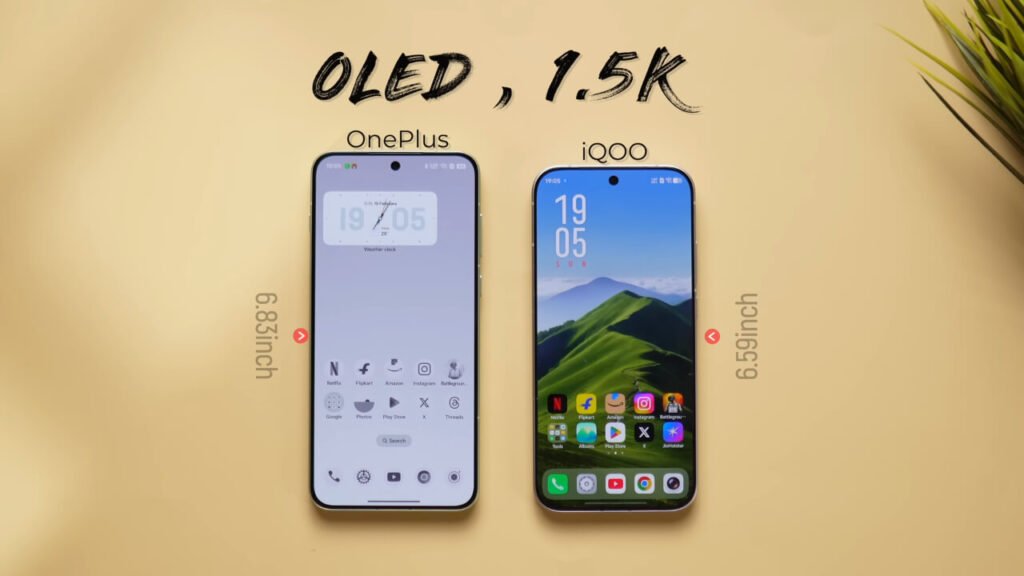
- OnePlus 15R: Features a massive 6.83-inch display with a blazing 165Hz refresh rate. It is an absolute treat for content consumers and high-FPS gamers. The colors are punchy, and the large screen makes movies feel cinematic.
- iQOO 15R: Offers a slightly smaller 6.59-inch display with a 144Hz refresh rate. While the refresh rate is lower than OnePlus, iQOO wins in Outdoor Visibility. Under direct sunlight, the iQOO panel remains exceptionally clear and readable.
Performance: Snapdragon 8 Gen 5
Under the hood, both phones utilize the latest Snapdragon 8 Gen 5 chipset paired with LPDDR5X Ultra RAM and UFS 4.1 storage. In day-to-day tasks, both are lightning-fast. However, their “personalities” emerge during heavy usage:
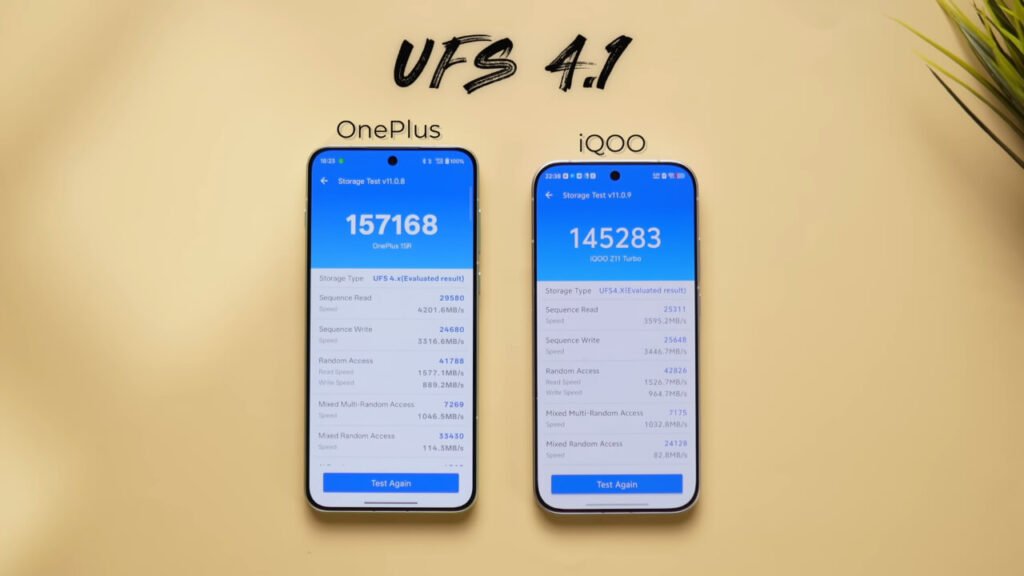
- The OnePlus Approach: OxygenOS 16 is the star here. The animations are fluid, the UI is clean, and the system feels incredibly polished. In benchmarks (AnTuTu and Geekbench), OnePlus consistently scores slightly higher, showing better overall optimization.
- The iQOO Approach: iQOO is built for the Hardcore Gamer. It features a dedicated Q2 Gaming Chip that helps maintain stable frame rates and reduces jitter. Even though the display is 144Hz, the gaming stability on iQOO is arguably more consistent during long sessions.
OnePlus 15R vs iQOO 15R Camera
Both phones feature a 50MP main sensor and an 8MP ultra-wide lens. While OnePlus focuses on natural skin tones and HDR management, iQOO has taken a massive leap in video.
The iQOO 15R supports 4K 60fps recording on the Front Camera, a feature often reserved for expensive flagships. The OnePlus 15R, unfortunately, is capped at 4K 30fps for selfies. If you are a social media creator or a vlogger, iQOO provides a distinct advantage in video versatility and selfie sharpness.
Battery & Charging
In 2026, battery capacities have reached new heights.
- iQOO 15R: Leads the pack with a massive 7600mAh battery and 100W Flash Charging. It’s a two-day phone for many users and charges from 0 to 100% significantly faster than its rival.
- OnePlus 15R: Comes with a 7400mAh battery and 80W charging. While these numbers are excellent, they fall slightly short of the iQOO’s sheer endurance.
OnePlus 15R vs iQOO 15R Comparison
| Feature | OnePlus 15R | iQOO 15R |
| Build Material | Glass Back + Metal Frame | Plastic Back + Metal Frame |
| Durability | IP68 / IP69 / IP69K | IP68 / IP69 |
| Display | 6.83″ AMOLED, 165Hz | 6.59″ AMOLED, 144Hz |
| Processor | Snapdragon 8 Gen 5 | Snapdragon 8 Gen 5 |
| Rear Camera | 50MP (Main) + 8MP (UW) | 50MP (Main) + 8MP (UW) |
| Front Camera | 16MP (4K @ 30fps) | 16MP (4K @ 60fps) |
| Battery | 7400mAh | 7600mAh |
| Charging | 80W Wired | 100W Wired |
| Software | OxygenOS 16 (Clean) | FuntouchOS 16 (Feature-rich) |
Final Verdict: Which One Should You Buy?
The choice boils down to your lifestyle:
- Choose the OnePlus 15R if: You value premium build quality, a larger screen for media consumption, and a clean, ad-free software experience. It is the better “all-rounder” for a professional or a casual user who wants a touch of class.
- Choose the iQOO 15R if: You are a dedicated gamer or a content creator. The lighter weight makes it easier to handle, the battery lasts longer, and the 4K 60fps front camera is a game-changer for video enthusiasts.
Read More : iQOO 15R Launched in India With 144Hz Display, Snapdragon 8 Gen 5 SoC: Price, Specifications